Using the Library

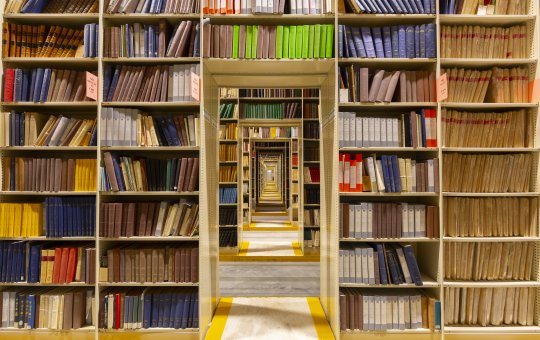
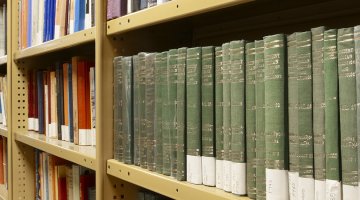
The National Library of Australia is a public research and reference library. It has more than nine million items in its collection, including books, journals, newspapers, maps, music, manuscripts, pictures, oral history, ephemera and electronic resources, including websites. Many of these items are published in Australia or are about Australia, but that is not all.

The Library also has world-class Asian and Pacific collections and many other overseas publications and rare books. The Library aims to meet the information needs of all Australians and people from overseas who are researching Australian subjects.

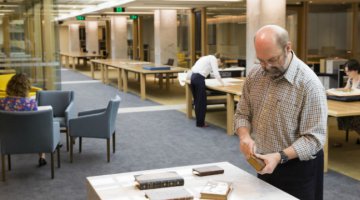
Pictures, maps, music and some manuscripts and published materials are being digitised to make it easier to access rare and unique Australiana. The Library acquires material through donation and purchase. Australian publishers are required to deposit a copy of their publications under the ‘legal deposit’ provisions of the Copyright Act, 1968 . Offers of material and donations from members of the public are welcome, including donations made under the Australian Government’s Cultural Gifts Program. This scheme provides a financial incentive to the private owners of cultural materials to donate them to public institutions. You can access the Library’s collections through the reading rooms. The Main Reading Room will probably be your first stop because it gives you access to the Library’s general collection of published material: books, journals and electronic resources. There are also separate reading rooms for Newspapers and Microforms, Asian Collections, Manuscripts, Maps and Pictures.

The Library’s reading rooms provide access to:

  • the collections
  • the Internet
  • electronic resources such as journals, indexes and databases
  • the Library’s online catalogue and website
  • photocopiers, printers and microform equipment
  • wireless network
  • wordprocessing facilities
  • music notation software, the electronic keyboard and audio listening
  • assistance from staff in using the Library’s collections and services.

You may bring small bags, laptop computers and your own books into the reading rooms, but large bags must be left in the cloakroom on the ground floor. Mobile phones must be turned to silent. No food or drink may be brought into the reading rooms.

You can access the catalogue from anywhere, at any time, through www.nla.gov.au

How do I request an item?

The first step is to register as a reader and obtain a reader’s card. You can do this in any of the Library’s reading rooms. You can then use your card to request most items in the Library’s collections through the online catalogue using the eCallslip request service. You may have to request some special collection items by filling out a paper call slip.

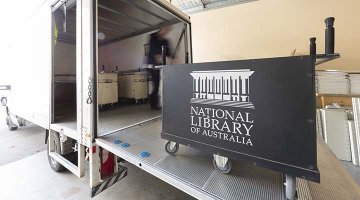
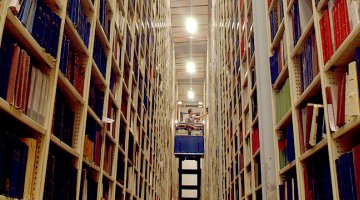
Except for small collections of reference books, such as dictionaries and encyclopaedias, all the Library’s collections are kept in closed access storage, or stacks. Library staff retrieve the items you request and then deliver them to the appropriate reading room. This can take up to 45 minutes for material stored on-site, or up to two hours for material kept off-site. To avoid delays, you can request material at any time in advance of your visit using the eCallslip request service from the Library’s online catalogue.

Need help?

Reading room staff are available to help you find and request the material you need. They will also help you to find information, but they will not carry out lengthy research for you.

The Library produces guides, indexes and finding aids to its collections. These are available on the Library’s website at www.nla.gov.au

Back to the top

Use of material

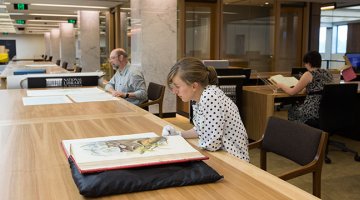
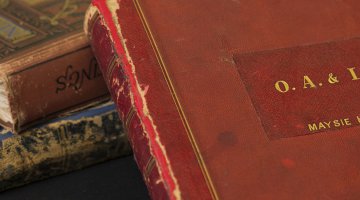
Some of the Library’s collection items are old and fragile. Original documents, such as manuscripts, are irreplaceable and must be treated extremely carefully. You will be asked to wear gloves when handling valuable, old or fragile material and to use a pencil if taking notes. In some cases, you will have to use digital copies, preservation microfilm, or photocopies instead of the originals.

Library collection materials are not available for loan to individuals. Some items are available for interlibrary loan. You can make copies yourself, subject to copyright provisions, on photocopiers available in the general reading rooms, using your reader’s card to make payment. In some circumstances, with prior permission, you may use your own copying equipment. Library staff will need to copy some special items for you. If you prefer to have copies made for you, you can order from Copies Direct

Some material requires permission to copy from the owner or copyright holder, in which case you need to obtain written, signed authorisation from the owner.

You can find out more about copyright from the information sheet Thinking of Copying Material from the National Library’s Collections?

If you wish to reproduce material from the Library’s collections in a publication such as a book, website, merchandise, on film or in any other format, you must seek written permission from the Library and from any copyright holders. The Main Reading Room contains a collection of open access printed reference works, including dictionaries, encyclopaedias and directories, and many reference resources available in electronic form. You can also browse a selection of new books and journals on display. All printed books and journals from the general collection are available for reading in this room.

Reading Rooms

See our Library opening hours

The Main Reading Room (Ground Floor) contains a collection of open access printed reference works, including dictionaries, encyclopaedias and directories, and many reference resources available in electronic form. You can also browse a selection of new books and journals on display. All printed books and journals from the general collection are available for reading in this room.

The Newspapers and Microforms Reading Room (Lower Ground Floor 1) provides access to newspaper and microform collections and to resources for researching family history.

The Library’s collection of some 8000 newspaper titles includes all the Australian capital city daily papers, as well as papers from regional cities and country towns, and papers published by ethnic groups, political organisations or those representing special interests. There is also a large collection of overseas newspapers in English and other languages. As well as collecting newspapers in hard copy and microform, the Library currently subscribes to two major online services: Factiva, which provides access to 9000 titles, many of them full-text, and The Times Digital Archive, the complete online edition of the London Times from 1785–1985.

The Petherick Reading Room (next to the Main Reading Room) provides services for advanced researchers. Oral history interviews and rare and special printed materials from the Library’s collections, such as music, ephemera, early Australian material and rare books are also issued in this reading room.

The Asian Collections Reading Room (3rd Floor) provides access to a range of Asian language books, journals and electronic resources and databases. Current issues of newspapers are available in Chinese, Japanese, Korean and Thai. Asian languages covered include Chinese, Japanese, Korean, Thai, Khmer, Lao, Burmese, Manchu, Mongolian and Tibetan. Library staff are fluent in some of these languages and are available to help you. You can also search items in Chinese, Japanese or Korean languages held by the Library and other Australian libraries in script or romanised form through Libraries Australia (librariesaustralia.nla.gov.au). If you are looking for Western and non-script language works on Asia (for example Indonesian), you should go to the Main Reading Room.

The Manuscripts Reading Room (2nd Floor) provides access to the Manuscripts Collection, which includes the personal papers of notable Australians and the archives of a range of national non-government organisations. The collections are diverse, containing letters, diaries, notebooks, speeches, drafts of books, articles and creative works, research files, photographs, minute books, agenda papers, logbooks and financial records.  Highlights of the collection include the papers of Edward Koiki Mabo, Sir Hans Heysen, Meryl Tankard, Peter Sculthorpe, Henry Handel Richardson, Alfred Deakin and the journal kept on the Endeavour by Captain Cook. Organisational records include those from the Returned Services League and the Australian Conservation Foundation.

The collection also contains important material relating to Antarctica, New Zealand, the Pacific Islands and Southeast Asia. You can also find a small number of European medieval manuscripts.

The Maps Reading Room (Lower Ground Floor 1) provides access to over 600 000 maps, including examples of early European prints, atlases and globes, an extensive collection of maps tracking the exploration and settlement of Australia, and modern mapping for most countries with particular strengths in Australia, Southeast Asia and the Pacific.

Among the rarities in the collection are the only known copy of the 1659 Doncker maritime atlas of the world, manuscript charts of Willem de Vlamingh’s 1697 voyage to New Holland, and a 1740 map of the world by John Bowles, which shows the east coast of Australia. There are large collections of Australian parish maps, coastal charts and post-1900 topographic maps, as well as a unique collection of historic aerial photographs of Australia and Papua New Guinea. The collection also includes significant material relating to the establishment of Canberra, and sales and allotment plans for other Australian cities and towns.  

Many of the rare maps have been digitised and are available online. Digital spatial data is available on CD-ROM and the Internet. A comprehensive collection of gazetteers of all nations of the world is available in print and electronic form.

The Pictures Reading Room (2nd Floor) provides access to more than 800 000 pictures including oil paintings, watercolours, photographs, drawings, posters, prints and objects of historical and documentary interest, from eighteenth-century drawings made by officers of the First Fleet to contemporary digital photography.

Highlights of the collection include S.T. Gill’s 1850s watercolours of goldrush life, Frank Hurley’s photographs of Shackleton’s Antarctic expedition, architectural perspectives on silk by Marion Mahony Griffin, portraits of many notable Australians and documentation of people, places and events ranging from Régis Lansac’s dance photography to images by Wolfgang Sievers of working life and industry.

The collection also includes some material relating to New Zealand, Antarctica and the Pacific.

You don’t have to go into the reading rooms to access the collections. All the Library’s collections are listed in the online catalogue on our website and on Libraries Australia.

Back to the top

The Pictures Catalogue and PictureAustralia

The Pictures Catalogue (www.nla.gov.au/catalogue/pictures) contains descriptions of paintings, drawings, prints, photographs and objects held in the Pictures Collection. Over 100 000 images have been digitised and can be viewed online.

PictureAustralia (www.pictureaustralia.org) is a service provided by the National Library of Australia and other cultural institutions throughout Australia. It is a single access point to more than one million digitised images held in the collections of Australian libraries, archives, museums and galleries.

Back to the top

MusicAustralia

The Library holds a large research collection of Australian music, including published and unpublished scores, archival sound recordings of folk song, and resources about music and musical life. The MusicAustralia service (www.musicaustralia.org) provides online access to Australian music of all types and styles, historical and contemporary. You can view and print scores, listen to and download recordings, search for related materials and discover information on artists and organisations.

Back to the top

Australia Dancing

The Library collects Australian dance resources across a broad spectrum of dance styles, and dance material can be found in several collection areas. The Library also hosts the Australia Dancing service (www.australiadancing.org) which provides information about people, companies and performers’ dance resources as well as news and events.

Back to the top

Register of Australian Archives and Manuscripts

The Register of Australian Archives and Manuscripts (RAAM - www.nla.gov.au/raam) is a guide to collections of personal papers and non-governmental organisational records held by Australian libraries and archives.

Back to the top

Maps Directory

Map Collections in Australia: A Directory (www.nla.gov.au/mapdir) is a service which provides access to information about map collections in Australia.

Back to the top

Oral History Directory

The Library’s Oral History and Folklore Collection (www.nla.gov.au/ohdir) includes more than 35 000 hours of interviews and recordings. Highlights include Dame Mary Gilmore reciting her poetry, Jack Luscombe recalling his participation in the 1891 shearers’ strike and recordings of Kostas and George Tsourdalakis, Cretan traditional musicians now living in Australia. There are interviews with Australians from many walks of life ranging from Nobel Laureates to Chinese-Australians, from people living with HIV-AIDS to drovers.

Australia’s Oral History Collections: A National Directory is an online service which provides access to information about oral history collections in other Australian collecting institutions and those held privately.

Back to the top

Services for offsite users

Website

You can access an extensive range of information through the Library’s website at www.nla.gov.au. Search our catalogue, read e-journals, view online exhibitions or rare Australian heritage materials, access our services and find out what’s on at the Library.

Reference enquiries

If you would like information about the Library’s services or have questions about subjects you are researching, you can ask for help without coming to the Library.

Ask a librarian

AskNow

You can chat online, in real time, with a reference librarian using the interactive chat reference service, AskNow which is available at www.asknow.gov.au

Copies Direct

To get copies of articles, chapters of books, photographs, pictures, maps, manuscripts, music, sound recordings and microfilm go to www.nla.gov.au/copiesdirect/ or contact the Document Supply Service on the Toll Free Number: 1800 235 627 or email: docss@nla.gov.au.

Need more information?

Contact information

National Library of Australia
Parkes Place
CANBERRA ACT 2600

  • General Enquiries  (02) 6262 1111
  • General Reference Enquiries (02) 6262 1266 make an online enquiry
  • Asian Collections Reference Enquiries (02) 6262 1500 asiancol@nla.gov.au
  • Manuscripts Reference Enquiries (02) 6262 1259 manuscripts@nla.gov.au
  • Maps Reference Enquiries (02) 6262 1282 maps@nla.gov.au
  • Pictures Reference Enquiries (02) 6262 1370 pictures@nla.gov.au For more information visit our website at www.nla.gov.au

Back to the top